Long before Amesh Adalja, MD, FIDSA, became an infectious diseases clinician, the field appealed to his sense of adventure. That interest in scientific discovery and solving complex problems helped shape a career spanning emerging infections, emergency medicine and health security — experiences he now brings to his role as editor-in-chief of IDSA Reporter, the Infectious Diseases Society of America's new online news magazine.
Both of Dr. Adalja's parents were physicians, exposing him to medicine from an early age. But one of his favorite childhood books, about Louis Pasteur's work on the rabies vaccine, particularly captured his imagination.
"I thought it was fascinating because it talked about invaders and an army to fight them, and all of that sort of detective work and adventure," Dr. Adalja said.
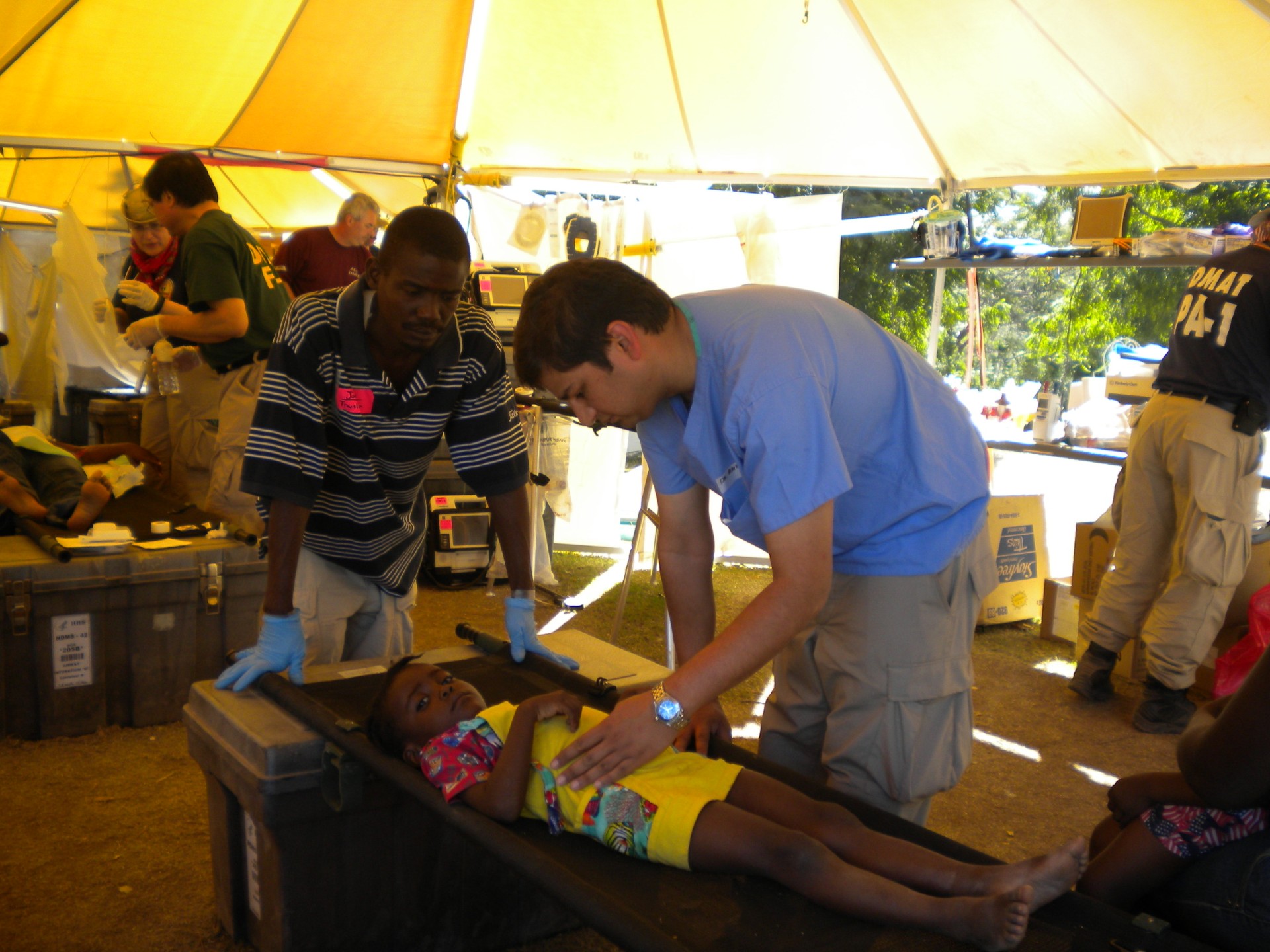
His path to a career in infectious diseases was not straightforward. At Carnegie Mellon University, Dr. Adalja majored in industrial management and graduated at 19. After entering the workforce, however, he found himself drawn back to infectious diseases.
Having grown up during the emergence of the HIV epidemic, Dr. Adalja recalled thinking that, if he became a physician, he wanted to work on infectious diseases that raised scientific questions and had implications beyond individual patients.
The memoir "Level 4: Virus Hunters of the CDC," by Joseph B. McCormick, MD, and Susan Fisher-Hoch, MD, about their experiences investigating emerging infectious diseases, including Ebola and Lassa fever, also helped crystallize the type of work he wanted to pursue.
"I thought, these are the problems I want to work on: emerging infectious disease, how infectious disease intersects with national security, pandemic preparedness, the societal impact of infectious diseases," Dr. Adalja said.
A 360-degree view of infectious diseases
After receiving his medical degree from the American University of the Caribbean School of Medicine, Dr. Adalja completed a combined residency in internal medicine and emergency medicine at Allegheny General Hospital in Pittsburgh, followed by two fellowships in infectious diseases and critical care medicine at the University of Pittsburgh. The breadth of that training was intentional.
"I have a 360-degree view of infectious diseases," he said. "Emerging infectious diseases are going to show up in the emergency department and end up in the ICU. I wanted to be able to stand in their shoes and know how hard it is to diagnose them."
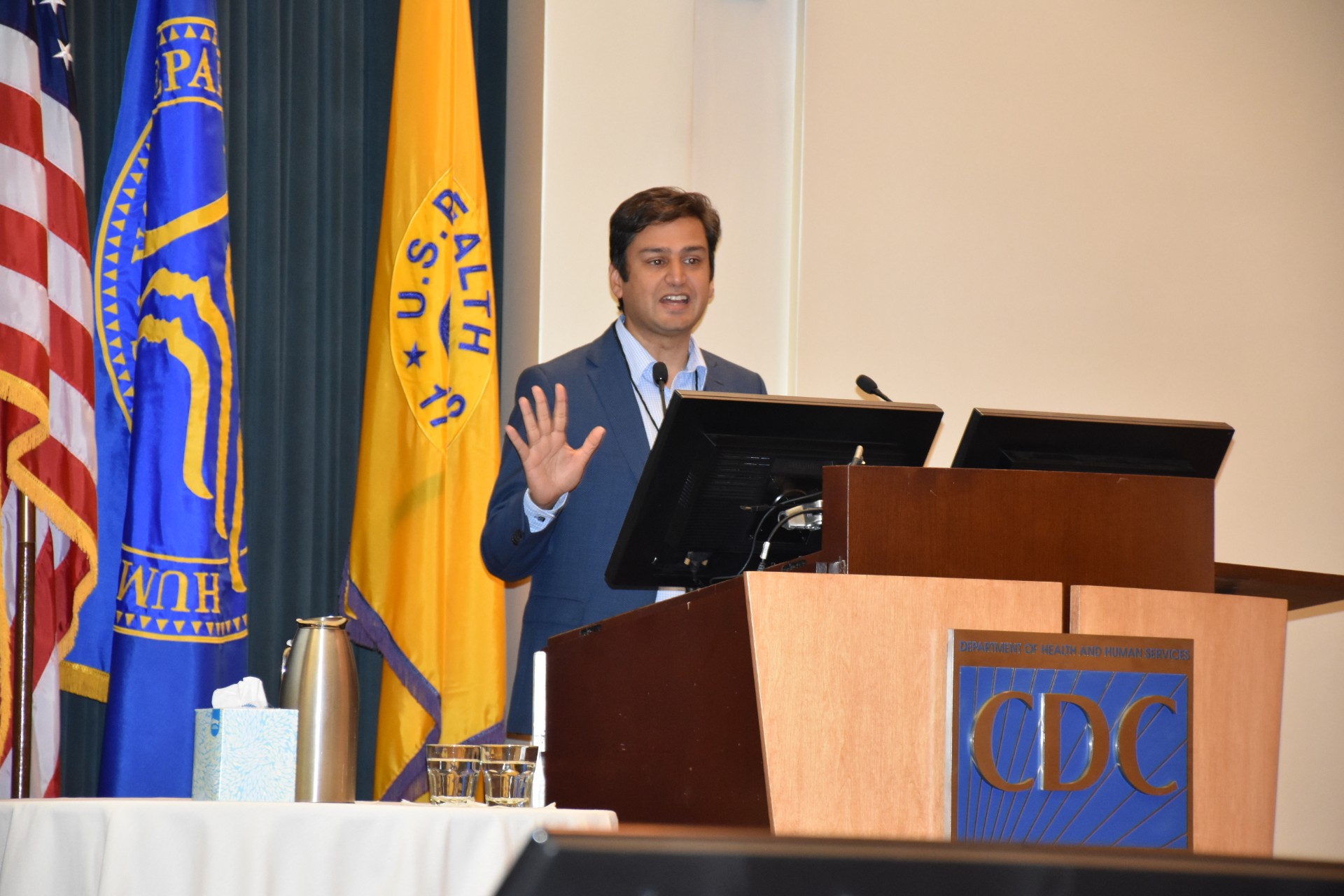
That training soon intersected with major infectious disease threats. Dr. Adalja was in training during the 2009 H1N1 pandemic and was an attending physician during the COVID-19 pandemic. During his infectious diseases fellowship, he spent time at what is now the Johns Hopkins Center for Health Security, exploring the intersection of infectious diseases and health security. He later served on government panels tasked with developing guidelines for the treatment of plague, botulism and anthrax in mass casualty settings.
Today, Dr. Adalja is a senior scholar at the Johns Hopkins Center for Health Security and an affiliate of the Johns Hopkins Center for Global Health, where his work focuses on emerging infectious diseases, pandemic preparedness and biosecurity.
His clinical training and health security work have also shaped his broader view of the specialty. He sees infectious diseases specialists as “civilization's defenders,” protecting society from threats such as measles, HIV and drug-resistant bacteria.
"I think of us like the Men in Black," he said. "We go to places you don't want to go and view things you don't want to see. And we try to keep infectious diseases at bay so that human life can progress and people can flourish."
More recently, Dr. Adalja's interests have centered on another challenge: moving scientific and technological advances into routine practice. He pointed to diagnostic testing for patients with unexplained illnesses, wastewater surveillance, mRNA vaccine technologies and artificial intelligence as tools whose value depends on how effectively they are used.
"We have all of these great tools, but if they aren't used, we don't actually increase our resilience to infectious diseases," he said.
He wants to shorten the lag between the development and adoption of these technologies so they can make a meaningful difference in clinical and public health practice. "How do you make that handoff so quick that people think about a new infectious diseases technology the way they think of a new iPhone that they want to have?" he said.
A new role with IDSA
Dr. Adalja's longstanding relationship with IDSA began when he was an infectious diseases fellow. Since then, he has served on the Society's public health and diagnostics committees and continues to represent the Society as a media spokesperson.
"The leaders of IDSA have been people that I've always looked up to, and I've been involved and engaged with the Society as much as I can be," Dr. Adalja said.
When IDSA approached him about helping to launch IDSA Reporter, his response was immediate. "The fact that IDSA thinks that I'm somebody they'd want to help start this publication, and that they have that kind of confidence in me and my perspective on infectious diseases, was enough for me to say yes," he said.
Dr. Adalja sees IDSA Reporter as a way to help infectious diseases clinicians navigate a field in which research, outbreaks, clinical developments and policy can change rapidly.
"There is so much news going on in infectious diseases every day," he said. "It is important to keep abreast of it and to interpret it."
He does not view the online magazine as a replacement for established sources of infectious diseases coverage. Instead, he wants the publication to distinguish itself by focusing on information that matters most to its readers.
That could mean covering an outbreak, a new antimicrobial approval or another development that also appears in broader health and science news. The difference, he said, lies in how stories are selected and framed. His guiding question when considering what to cover is simple: "Would I want my infectious diseases colleagues I work with in the hospital to know this?" he said.
A place to feel at home
Dr. Adalja envisions IDSA Reporter as more than a source of information. He wants infectious diseases clinicians to contribute perspectives from their own practices, share unusual cases or clinical dilemmas and discuss controversies affecting the field.
His goal is to encourage discussion and debate. "They want to write letters to the editors. They want to debate things. They want to talk about controversies in the field," he said.
IDSA Reporter could also give greater visibility to infectious diseases that receive less attention. "I definitely would want to use this forum to spotlight rare things, things that don't get much attention and are important as well," he said. "Anything in the infectious diseases world is game."
Ultimately, Dr. Adalja hopes the publication becomes a regular destination for infectious diseases clinicians. "I want it to be a place where they find a home, where they want to refresh the page and see what's new, what's going on and make it a two-way conversation."