Protecting evidence-based medicine and preparing for emerging infections will require stronger partnerships, clearer science communication and sustained advocacy from physicians and public health professionals, experts said during a roundtable at IDWeek 2026 moderated by Jeanne Marrazzo, MD, MPH, FIDSA, chief executive officer of IDSA.
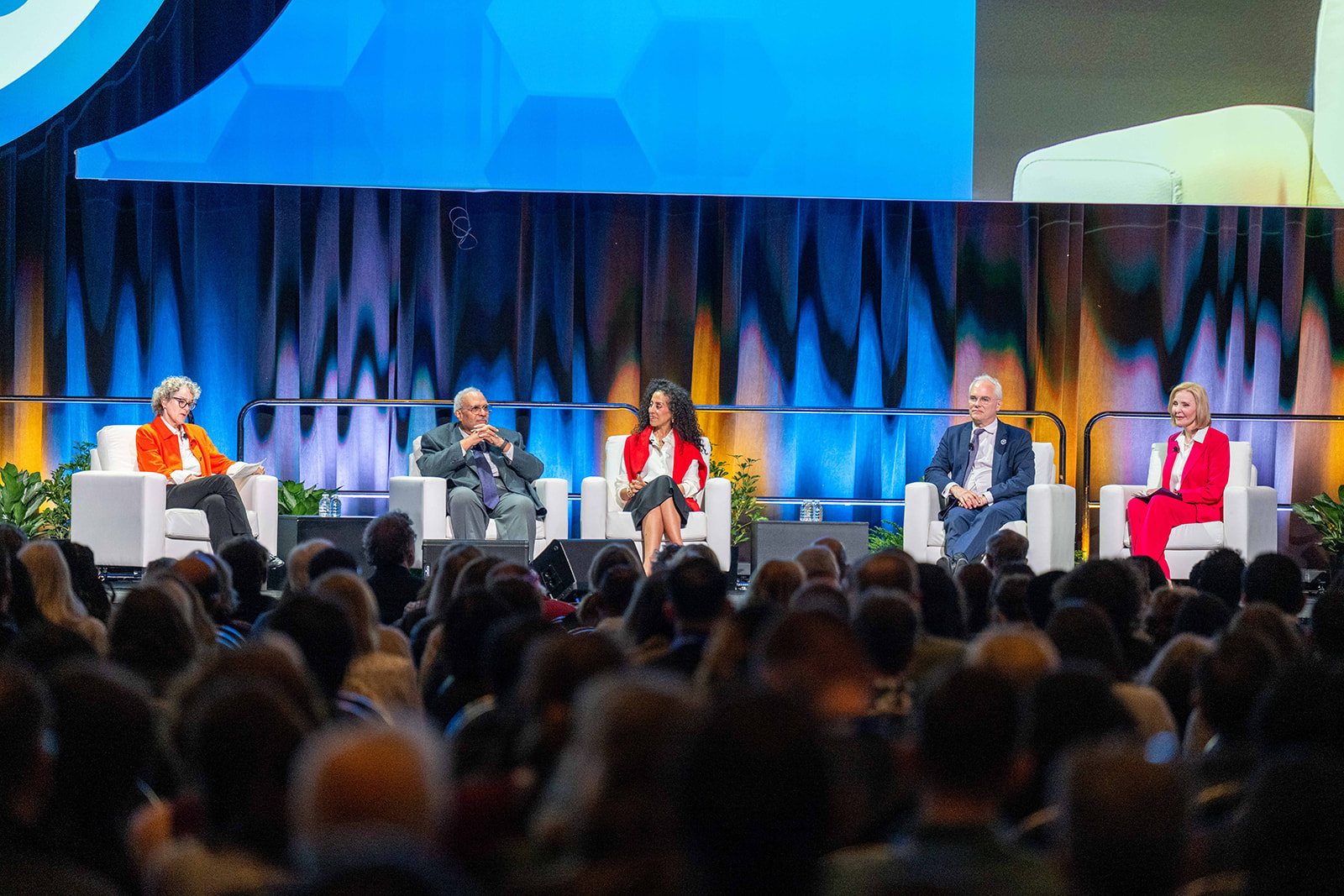
Joining her were Sandra Fryhofer, MD, MACP, president-elect of the American Medical Association; Richard Hatchett, MD, chief executive officer of the Coalition for Epidemic Preparedness Innovations; Georges Benjamin, MD, MACP, FACEP (E), FNAPA, chief executive officer of the American Public Health Association; and Jessica Malaty Rivera, MS, an infectious diseases epidemiologist, science communicator and executive director of the Infodemiology Initiative at the Public Good Projects.
Outbreak responses
Dr. Hatchett discussed how international partners are responding to an outbreak of Bundibugyo virus disease in the Democratic Republic of the Congo first declared in May, with imported cases reported in Kenya and Nigeria in recent weeks. He described two forms of collaboration: enduring relationships with vaccine developers and partnerships supporting national authorities leading the response.
He said established partnerships allowed CEPI to begin funding matched vaccine candidates within two weeks of the outbreak's identification. CEPI-backed Oxford Vaccine Group at the University of Oxford launched a phase 1 trial within about eight weeks, and the Serum Institute of India produced 620,000 vaccine doses within nine days of receiving the master vaccine seed from Oxford.
Dr. Hatchett said the Democratic Republic of the Congo's Ministry of Health and National Institute of Biomedical Research were leading the response and research, with external partners providing additional support, including the Institute of Tropical Medicine in Antwerp, Belgium and Doctors Without Borders. "I think the encouraging thing about these partnerships is that we have worked together previously," he said. "We are developing muscle memory that lets us work together efficiently."
He added that phase 2/3 field trials are now underway to assess vaccine efficacy, a little more than five months after the outbreak was identified. He contrasted that timeline with the at least 12 months needed before field trials began during the 2014-2015 Ebola outbreak response. "That's a pretty sharp decline, but it's not fast enough," he said. "We have ways to go."
Vaccine guidance
Turning to the vaccine landscape in the U.S., Dr. Fryhofer was asked how medical organizations were collaborating to provide vaccine recommendations amid conflicting information.
She pointed to the Vaccine Integrity Project, led by Michael Osterholm, MD, MPH, director of the University of Minnesota's Center for Infectious Disease Research and Policy, which convenes scientific experts to conduct independent reviews of evidence on vaccine risks and benefits. Dr. Fryhofer said medical specialty societies, including IDSA, had used those reviews to update recommendations for the fall respiratory virus season. She also described the AMA's effort to bring together evidence, recommendations, questions and answers, and links to reviewed studies in a single resource, spreadthefacts.org.
“Vaccine guidance must be clear, credible and grounded in evidence. And because of this collaboration, it can be,” she said.
Strengthening advocacy
Dr. Benjamin called for professional societies to work more closely with businesses and citizen groups to reestablish a working relationship with the federal government.
Businesses bring economic influence, while citizen groups bring the public’s voice, he said. "If you can pull together those groups as part of our professional societal coalitions, we can be a lot more successful at getting government to come to the table and listen to us."
Dr. Benjamin cited opposition to a federal grant-making proposal associated with the Office of Management and Budget as an example. He said the proposal drew more than half a million responses and described participation by scientific advocacy groups, businesses and members of the public.
Rivera called for partnerships with people who reach audiences beyond traditional scientific channels, including influencers and celebrities. Storytelling and shared experiences could help connect with those audiences, she said, describing how discussing her own experiences as a mother helped her reach parents and caregivers.
Rivera added that science communication should begin during scientific training and be supported by investment in skill development and jobs. “I would argue that anybody in science should be a science communicator,” she said.
Opportunities ahead
Looking three to five years ahead, Dr. Marrazzo asked panelists what concerned them most and what gave them hope.
Dr. Hatchett cited emerging infections, potential misuse of artificial intelligence and laboratory accidents. He also warned about missed opportunities to use promising tools, pointing to lenacapavir's potential to reduce HIV transmission. "If that product isn't scaled and made really broadly available, we will miss one of our best opportunities to bring the HIV pandemic to an end," he said.
His optimism centered on messenger RNA and other vaccine technologies, along with the potential for AI to accelerate biomedical development.
Dr. Fryhofer identified declining trust in science and conflicting messages as concerns. She said CDC lost 30% of its workforce between March 2025 and May 2026 and warned against allowing politics and ideology to determine what constitutes good science. “Physicians have a responsibility to speak up and defend evidence-based medicine and to ensure our patients have access to reliable, accurate health information,” she said.
She also expressed enthusiasm for mRNA and called for more research funding and clearer explanations of the technology, so patients can understand and benefit from it. Discussing AI, she emphasized the continuing importance of physician judgment and patient relationships. “No matter the future of AI, patients need to know that there's a human being at the other end helping to guide their care,” she said.
Rivera described the combined challenge of emerging biological threats and information threats, including misinformation and growing uncertainty about whom to trust. She also expressed concern about what she described as a “death of expertise" and a rise in "armchair expertise.” Rivera saw reason for hope in trainees' growing interest in science communication. She pointed to curricula being developed at Johns Hopkins University, Yale University and other institutions to help trainees address information threats.
Dr. Benjamin identified complacency as his principal concern, urging attendees to address problems rather than assume someone else would resolve them. "We need to get up every single morning and aggressively address the challenges that we have," he said. He also called for maintaining international partnerships and rebuilding global health work.
Advice for emerging professionals
The discussion concluded with advice for attendees beginning careers in infectious diseases, whether in clinical care, research or public health. Dr. Fryhofer encouraged them to stay curious, remain grounded in evidence and recognize the power of their voices. "Translating science into public trust is now more essential than ever," she said.
Rivera urged professionals entering infectious diseases to take courses in science communication and data visualization, along with other training in explaining scientific information. “It'll be your most used skill, in my opinion,” she said.
Dr. Hatchett emphasized the role of professional organizations in bringing those voices together. “Your individual voice is important, but your collective voice through organizations like IDSA are important,” he said. “Support the organizations that can help you speak collectively to things that are really important to you.”